Building the trusted sensing layer for smart living
V-SENSE is being established at VinUniversity to develop sensing systems that do more than measure: they assess and communicate the quality and limitations of their own outputs.
Why V-SENSE exists
Hospitals, homes, vehicles, buildings, and infrastructure increasingly depend on sensors. Yet sensor outputs are often passed to control systems and AI models without enough information about drift, noise, calibration failure, or uncertainty.
V-SENSE is being created to address that gap. The institute will bring together sensing hardware, embedded systems, validation science, human factors, and translation. Its objective is to develop systems whose performance and failure behavior can be measured under conditions relevant to their intended use.
Infrastructure for building and validating sensing systems
V-SENSE
A two-core laboratory — fabrication, electrochemistry, optics, and high-speed instrumentation, open to every research group.
Founding Chief Scientific Officer
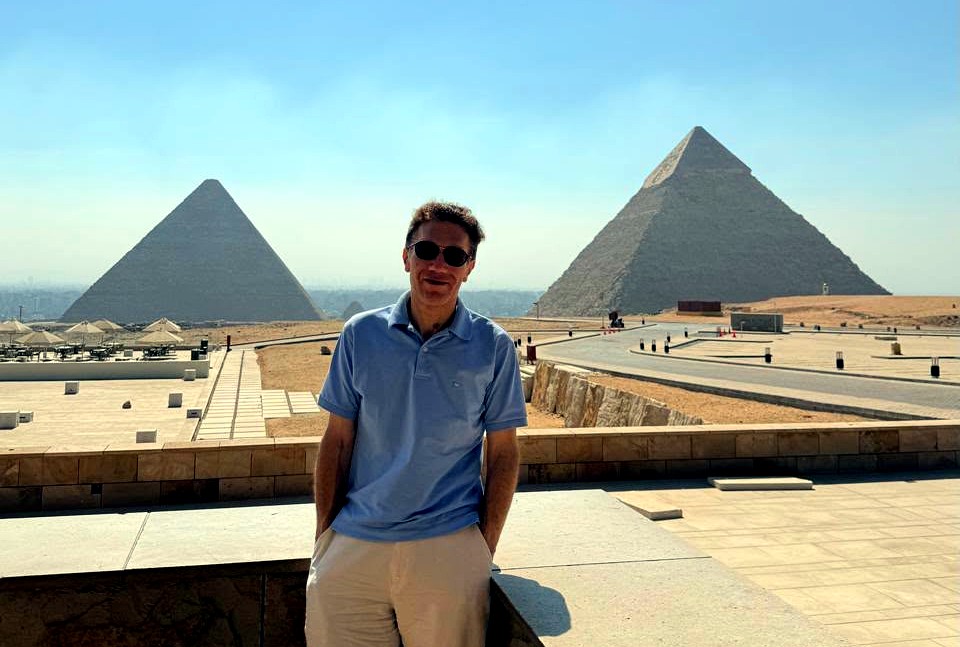
Khaled Nabil Salama
Background & Credentials
Professor of Electrical and Computer Engineering at KAUST since 2009 (founding Program Chair 2009–2011). Senior member of IEEE. Authored 450+ peer-reviewed articles and holds 50+ patents on low-power circuits for intelligent sensors. Recipient of Stanford-Berkeley Innovators Challenge Award in Biological Science.
- PhD in Electrical Engineering, Stanford University (2005)
- MSc in Electrical Engineering, Stanford University (2000)
- BSc in Electronic and Communications Engineering, Cairo University (1997)
- IoT Thrust Leader and Associate Director, KAUST Semiconductor Initiative (2022–2025)
- Associate Dean for Students, KAUST (2020–2023)
- Director, KAUST Sensors Initiative (2017–2022)
- Assistant Professor, Rensselaer Polytechnic Institute, NY (2005–2009)
"The next generation of IoT and smart infrastructure doesn't need more sensors. It needs smarter sensors—devices that understand their own limitations and report confidence alongside measurement."
— Khaled Nabil Salama, Founding Chief Scientific Officer
A growing founding team
V-SENSE launches January 2027 with a multidisciplinary team dedicated to trusted, self-aware sensing. Recruiting now.
Faculty members
Postdoctoral researchers
Graduate researchers (PhD & MSc)
Research and operations staff
Explore Our Research & Programs
Research Pillars
Discover our three core research areas driving innovation in trusted sensing systems.
Explore Research →Pilot Projects
See our research in action through real-world pilot programs in critical domains.
View Pilots →